


Canada Student Loan forgiveness program expansion


EXCITING NEWS!
As of December 31, 2025, pharmacists are now included in the Canada Student Loan Forgiveness program. This is a major advocacy win led by CPhA and CAPSI that will help strengthen rural and remote health care by supporting recruitment and retention of pharmacists in underserved communities.
We are particularly pleased that pharmacists are eligible for the same maximum level of forgiveness permitted for physicians, recognizing the significant financial investment required to complete a pharmacy degree and the expertise and value pharmacists bring to the health-care system.
Visit the Government of Canada website for eligibility and application information.
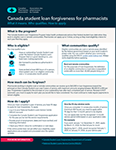
NEW! Check out our Canada Student Loan Forgiveness for Pharmacists infographic to find out what it means, who qualifies and how to apply!
Background information
The Government of Canada offers Canada Student Loan forgiveness to eligible health-care professionals to relocate or return to a rural or remote community. Ahead of the 2024 federal budget, we worked with the Canadian Association of Pharmacy Students and Interns (CAPSI) to press for the inclusion of pharmacy graduates to the Canada Student Loan forgiveness program.
How we got here: A long road to implementation
This milestone is the result of more than a decade of sustained, joint advocacy.
Since CAPSI and the Association of Faculties of Pharmacy of Canada (AFPC) first called on the federal government to expand the Canada Student Loan Forgiveness program to include pharmacists in 2014, the issue has remained on the federal agenda. CPhA and CAPSI worked together to advance the case for pharmacist inclusion, emphasizing loan forgiveness as a practical tool to support recruitment and retention in rural and remote communities.
Despite broad agreement that pharmacist inclusion made sense, it took time for the policy to move from concept to implementation. Below is a snapshot of how sustained advocacy helped move the issue forward.
2014-2015
Issue placed on federal agenda
CAPSI and AFPC formally ask the federal government to include pharmacists in the Canada Student Loan Forgiveness program.
2022
Evidence building and formal policy input
CPhA submits formal input through a federal consultation on expanding the program to pharmacists. Submission includes qualitative interviews with rural and remote pharmacy owners who identified loan forgiveness as a meaningful recruitment and retention tool and a recommendation that pharmacists receive forgiveness amounts comparable to physicians, reflecting similar education and training costs.
Budget 2022: Commitment to review
Federal government commits to a review process to expand the list of eligible professions. While the Liberal party’s election campaign platform specifically includes pharmacists, the budget does not identify professions under consideration. CPhA and CAPSI advocate for the inclusion of pharmacists in the expansion.
2023–2024
Grassroots and political engagement intensifies
CPhA and CAPSI launch a grassroots advocacy campaign to mobilize pharmacists and pharmacy students, including letter templates and outreach tools. Pharmacists and students from across the country send hundreds of letters to MPs in support of pharmacist inclusion, while CPhA holds dozens of meetings with MPs and government officials to highlight pharmacist workforce shortages and the impact access to care in rural areas.
Budget 2024: Pharmacist inclusion announced
Federal government announces its intention to expand the program to include pharmacists.
2024–2025
Focus on implementation and equity
Sustained advocacy efforts focus on implementation and ensuring pharmacists are eligible for forgiveness amounts comparable to physicians.
February 2025
Proposed regulations published
Proposed regulatory changes are published, including pharmacist eligibility and an anticipated start date of November 1, 2025. CPhA and CAPSI maintain contact with federal government throughout the year, continuing to advocate for action.
January 2026
Regulations are finalized
Regulations are finalized and pharmacists are officially included in the program at the same level as physicians.
Keys to success
CPhA and CAPSI’s advocacy efforts succeeded because we combined:
- Long-term collaboration and sustained pressure
- Evidence and lived experience from rural pharmacy owners and communities
- Grassroots mobilization, with pharmacists and students contacting MPs directly
- Direct engagement with decision-makers, including ongoing meetings and follow-up
- Clear, consistent policy asks, including appropriate forgiveness levels aligned with training costs
What’s next?
Now that pharmacists are officially included in the program, CPhA and CAPSI will continue monitoring implementation and advocating for policies that strengthen the rural and remote pharmacist workforce.
Thank you to everyone who supported this advocacy work over the years. This is a meaningful step forward for pharmacists and for the rural and remote communities who rely on pharmacists every day.